

Air Freight
When timelines are tight and demand shifts without warning, expedited air freight keeps projects moving. SameDayAir.com coordinates cargo booking and delivery so your cargo arrives on time, with full visibility from origin to destination.
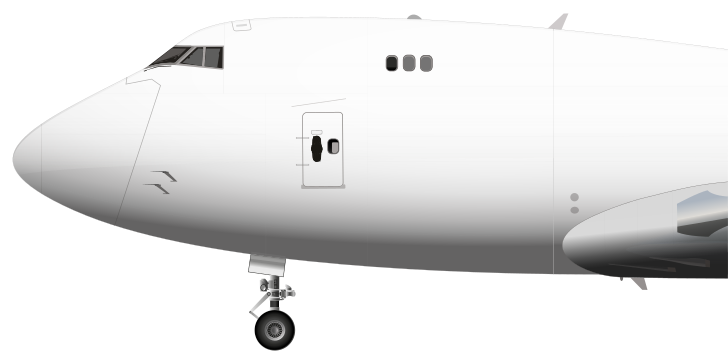





Air Freight Services Built for Every Cargo Type
Air Freight: When Your Cargo Cannot Wait
Air freight is the movement of goods by aircraft, covering both domestic lanes across North America and international routes reaching global markets. It is the fastest available mode of transport, designed for time sensitive cargo, high value goods, and shipments where delays carry real operational or financial consequences.
Compared to ocean or ground transportation, air shipping moves cargo with fewer touchpoints, which reduces handling risk and shortens transit windows significantly. Cargo travels on dedicated aircraft or in the belly space of passenger airlines, depending on the shipment size, route, and urgency. Each shipment is documented with an air waybill, which serves as the contract of carriage between the shipper and the carrier and tracks the cargo from origin to final destination, including loading and unloading at each transfer point.
Air freight is widely recognized as the most expensive mode of transport, but for time critical shipments, the cost is typically justified by speed, reliability, and the reduced risk of damage or loss. When other modes cannot meet a deadline, air freight is the answer.

Next Flight Out Expedited Air
Next flight out service is built for time sensitive freight that cannot wait for a scheduled departure. Your cargo is booked on the earliest available flight, whether on a dedicated freighter or in the belly space of passenger airlines, and your dedicated team manages every step from pickup through unloading and delivery confirmation.

Air Cargo Charter
International shipping requires coordination across multiple carriers, customs clearance at the destination, and compliance with local regulations at every point of transit. SameDayAir.com acts as your freight forwarder, managing documentation, air waybill preparation, and carrier selection to keep your cargo moving across global trade lanes without unnecessary delays. Our tailored solutions cover complicated cross-border movements that other modes simply cannot handle at speed.

Expedited Freight Shipping
Not every shipment fits standard parameters. Oversized, heavy items, hazardous materials, and other specialized freight require specific aircraft, handling procedures, and regulatory compliance. Our team identifies the right aircraft capacity and carrier for your specific requirements, ensuring safe, compliant transport from origin to final destination, including proper unloading protocols at every stop.
WHAT WE DO
How Air Freight Shipping Works
Air shipping involves more moving parts than most shippers realize, from carrier selection and booking to customs clearance and final delivery. This overview breaks down the logistics process so you know exactly what to expect when shipping with SameDayAir.com, and how our dedicated team keeps time sensitive freight on track from origin to destination.



Explore Your Air Freight Options
KEY BENEFITS
NATIONWIDE NETWORK
SameDayAir.com operates across a nationwide network of carriers and ground partners covering North America and destinations around the globe. Whether your shipment originates in a major hub or a smaller regional market, our carrier relationships give us access to routing options that keep time sensitive freight moving. We work with multiple carriers to secure the best price and the most direct routing for your shipment type, destination, and required delivery window.
EXPLORE OUR SERVICES



Air Freight Solutions Across Industries and Shipment Scenarios
- Time-Sensitive Manufacturing
- High Value Goods Requiring
- Remote and Under Serviced
- Global Trade and Cross-Border
- Critical Deadlines
- Seasonal Cargo Booking
- Dangerous and Special Cargo
Time-Sensitive Manufacturing Parts
A production line shutdown costs manufacturers thousands of dollars per hour. When a critical component fails and other modes cannot close the gap in time, air freight is the only viable path. SameDayAir.com coordinates next flight out service for time sensitive freight, managing booking and carrier selection to get replacement parts moving within hours. Fewer touchpoints mean less handling risk, and a dedicated team monitors the shipment from origin through delivery to keep your line running.
High Value Goods Requiring Secure Transit
High value items, including electronics, medical devices, precision instruments, and luxury products, require a shipping mode that minimizes exposure to handling risk. Air shipping moves valuable cargo faster and with fewer touchpoints than ocean or ground alternatives. The shorter transit window reduces the time your shipment is in motion and in potential jeopardy. SameDayAir.com selects carriers and routing options that match the security requirements of your freight, and your account manager maintains visibility throughout the entire transit, including unloading at the destination.

Remote and Under Serviced Location Delivery
Reaching remote and under serviced locations often requires a combination of air freight and ground transportation to bridge the gap between the nearest airport and the final destination. SameDayAir.com coordinates both legs, selecting the appropriate aircraft capacity for the air segment and arranging ground transport for last-mile delivery. This is common in oil and gas operations, mining, and infrastructure projects where the job site is far from major freight corridors. We manage the full logistics process so you have a single point of accountability across long distances.

Global Trade and Cross-Border Cargo
International shipping involves more than booking a flight. Customs clearance, trade policies, local regulations, and documentation requirements vary by country and shipment type. SameDayAir.com coordinates the full cross-border process, including air waybill preparation, freight forwarder coordination, and customs brokerage support. Our global network of carriers and partners covers major markets and trade lanes around the globe, giving shippers reliable door to door access to international destinations without navigating each carrier and customs process independently.

Same Day Air for Critical Deadlines
Some deadlines cannot be moved. Same day air is the appropriate solution when a shipment must arrive within hours, not days. SameDayAir.com offers same day options for urgent, time sensitive cargo across domestic North America lanes and select international routes. Your dedicated team identifies the earliest available departure, handles booking, and coordinates pickup and delivery to compress the total transit window as much as possible. This service is used by shippers across industries when the cost of delay exceeds the cost of air shipping.

Cargo Booking for Seasonal Demand Surges
Peak shipping seasons compress carrier capacity and drive up costs across all modes. Shippers who rely on standard carriers during high-demand periods often face delays, missed pickups, and limited routing options. SameDayAir.com works with multiple carriers to maintain access to air freight options even when capacity is constrained. Our team manages booking proactively, identifying available aircraft and routing alternatives before a capacity crunch becomes a missed delivery. Planning ahead with a dedicated freight partner reduces exposure during the most competitive periods and supports long-term growth in supply chain reliability.

Dangerous and Special Cargo Compliance
Dangerous goods and special freight require strict compliance with IATA regulations, carrier-specific rules, and destination country requirements. Misclassified or improperly documented shipments are rejected at origin or held at the destination, creating costly delays. SameDayAir.com has experience coordinating specialized movements, including hazardous materials, oversized freight, and cargo requiring specific aircraft configurations. Your account manager ensures documentation is complete, the correct aircraft capacity is confirmed, and all regulatory requirements are met before the shipment departs. No exception goes unmanaged.
AIR FREIGHT DEEP DIVE
Everything You Need to Know About Air Freight Services
How Air Freight Shipping Actually Works
Air freight shipping moves cargo via commercial passenger aircraft or dedicated cargo aircraft, connecting shippers to destinations across north america and beyond. The process begins with cargo booking, where a freight forwarder or carrier assigns space on a flight based on cargo type, weight, and dimensions. An air waybill is issued as the primary transport document, tracking the shipment from origin to destination airport.
Time Sensitive Cargo and Why Speed Matters
For time sensitive freight, air transport remains the fastest option across long distances, often cutting transit times from days to hours compared to surface transport or ocean freight. Businesses shipping high value goods, pharmaceuticals, or perishables depend on this speed to protect product integrity and meet contractual deadlines. The fewer touchpoints in the air freight process also reduce handling risk for valuable cargo.
Cargo Types and What Airlines Carry
Not every cargo type is accepted on every flight. Passenger airlines carry freight in belly hold space alongside luggage, while dedicated cargo aircraft handle heavier items, oversized loads, and special cargo that cannot travel in a passenger cabin. Understanding which aircraft type suits your shipment is a core part of selecting the right air freight options.
Specialized cargo, including electronics, automotive parts, and high value items, often requires specific handling instructions communicated at the time of cargo booking. Carriers assign responsibility for proper packaging and labeling to the shipper, and errors at this stage are a leading cause of delays at the destination airport.
Working with an experienced freight forwarder helps shippers navigate carrier requirements, select the right service level, and ensure the air waybill accurately reflects the shipment. This preparation is what separates a smooth delivery from a costly exception.
What Drives Air Freight Cost and Pricing
Air freight is widely recognized as the most expensive mode of transport per kilogram, but that cost reflects a specific value proposition: speed, reliability, and access to global markets that other modes cannot match on tight timelines. Shippers evaluating freight costs need to weigh the price of air transport against the cost of delays, inventory holding, or lost sales.
Key Factors Behind Air Freight Rates
Air freight rates are calculated using chargeable weight, which is the greater of actual weight or volumetric weight. Heavy items that are compact pay on actual weight, while bulky but light shipments pay on volume. Fuel surcharges, security fees, and carrier handling fees all layer onto the base rate, making it essential to request a fully itemized air freight quote before committing.
Lane-specific demand plays a significant role in rate volatility. Routes between major hubs in north america, Europe, and Asia see frequent rate swings based on capacity, seasonality, and global trade conditions. Shippers who book air freight in advance or maintain relationships with multiple carriers tend to secure more stable pricing.
Reducing Shipping Costs Without Sacrificing Speed
One practical approach to managing shipping costs is consolidation, where a freight forwarder combines smaller shipments from multiple shippers into a single booking. This reduces the per-unit air freight cost while maintaining access to express air freight timelines. It is a common practice for shippers whose volumes do not justify a full charter.
For recurring lanes, negotiating volume commitments with air carriers can yield meaningful rate reductions. A dedicated team managing your freight solutions can identify these opportunities and benchmark rates across multiple carriers to ensure you are not overpaying on any given lane.
Navigating Customs Clearance for Air Cargo
Customs clearance is one of the most operationally complex parts of international air freight. Every shipment crossing a border must be declared, classified, and assessed for duties and taxes before it can be released to the final destination. Errors in documentation are among the most common reasons a shipment arrives on time at the destination airport but sits in a customs hold for days.
Air Freight Regulations and Compliance Requirements
Air freight regulations cover everything from prohibited items and dangerous goods classifications to country-specific import restrictions tied to trade policies. Shippers must ensure their commercial invoice, packing list, and air waybill are consistent and accurate. Discrepancies between documents are a red flag for customs authorities and can trigger inspections that add days to transit time.
Local regulations at the destination country add another layer of complexity. Some markets require import licenses, phytosanitary certificates, or specific labeling in the local language. A freight forwarder with expertise in the destination market is invaluable here, as they understand what documentation is required before the cargo aircraft even departs.
Customs Brokerage as Part of Your Freight Solutions
Customs brokerage services handle the filing, communication with authorities, and payment of duties on behalf of the importer. Integrating customs brokerage into your air freight services from the start, rather than treating it as an afterthought, significantly reduces the risk of delays at the border. Many leading providers bundle brokerage with their air freight forwarding services for this reason.
For time-sensitive shipments, pre-clearance programs available in several countries allow customs declarations to be filed before the flight lands, so cargo can be released almost immediately upon arrival. Shippers moving high value items or urgent medical supplies should ask their freight forwarder whether pre-clearance is available on their specific lane.
Next Flight Out Services for Time Critical Shipments
Next flight out is the most urgent tier of air freight services, placing cargo on the very next available flight to the destination regardless of the time of day. It is the standard solution for time critical shipments where every hour of delay has measurable financial or operational consequences. Production line stoppages, medical emergencies, and critical infrastructure repairs are common use cases.
Same Day Air for Urgent Domestic Freight
Same day air services operate on compressed timelines, often moving cargo from pickup to delivery within hours across domestic lanes. Unlike standard air freight shipping, same day services require a dedicated team coordinating pickup, airport check-in, and final mile delivery simultaneously. The logistics process is more intensive, but the outcome is a shipment that arrives the same day it was tendered.
For shipments that miss the last commercial flight of the day, air charter services provide an alternative by securing a private aircraft dedicated entirely to the cargo. This eliminates the dependency on scheduled airline capacity and is particularly valuable for oversized and heavy cargo that cannot be accommodated in passenger aircraft belly holds.
Expedited Ground as a Complement to Air Transit
Not every urgent shipment requires air transit for the entire journey. Expedited ground services are often used for the first or last mile, connecting a shipper's facility to the nearest airport or moving cargo from the destination airport to the final destination. Combining air transit with expedited ground creates a door-to-door solution that maximizes speed without defaulting to air for every segment.
Under serviced locations and remote locations that lack direct air service often rely on this hybrid approach. A freight forwarder with a strong global network can design multi-leg solutions that keep cargo moving continuously, minimizing dwell time at each transfer point.

Trends Reshaping the Global Air Cargo Industry
The air cargo industry has seen significant structural changes over the past few decades, driven by the growth of e-commerce, shifts in global trade patterns, and the expansion of dedicated freighter fleets. Passenger airlines historically provided the majority of belly cargo capacity, but disruptions to passenger travel exposed how dependent the air freight industry had become on that capacity. Dedicated cargo aircraft operations have grown substantially as a result, increasing demand for air freight via freighter aircraft across global trade lanes.
Global Network Expansion and Underserved Markets
Carriers and freight forwarders have invested heavily in expanding their global network to reach markets that were previously difficult to serve by air. Under serviced locations in Southeast Asia, Africa, and Latin America are increasingly connected through regional hub-and-spoke models that feed into major international gateways. This global reach has opened new lanes for shippers looking to access emerging markets.
The growth of international air freight into these regions has also introduced new complexity around local regulations, currency risk, and infrastructure limitations at smaller airports. Shippers entering new markets benefit from working with a freight forwarder that has on-the-ground knowledge rather than relying solely on platform-based booking tools.
Technology and the Future of Air Freight Forwarding
Digital platforms have changed how shippers book air freight, compare rates across multiple carriers, and track cargo shipments in real time. Automated air waybill generation, electronic customs filing, and live shipment visibility tools have reduced manual errors and improved the overall reliability of the logistics process. These tools are now standard expectations rather than differentiators.
Weather disruptions and geopolitical events continue to create volatility in the air freight industry, requiring shippers to maintain contingency plans and relationships with multiple air carriers. A leading provider with a broad global network and a dedicated team can reroute cargo shipments quickly when primary lanes are disrupted, protecting delivery commitments even when conditions change.
Expedited Freight Excellence: Explore Our Resource and Blog Section
SameDayAir.com is a leader in the freight industry. Our blog and resource section offers information and resources to improve your logistics strategy.


From critical shipments to ongoing support, see why businesses continue to choose SameDayAir.com