

Air Freight Shipping
Air freight shipping requires more than a booking confirmation. When cargo crosses borders or needs to reach a remote facility by morning, the handoff between origin, carrier, and destination airport has to be managed precisely. SameDayAir.com coordinates every leg of that process, from cargo booking through customs clearance, so your shipment arrives without gaps in the chain.





Air Freight Services Your Shipment Can Depend On
Air Freight Shipping Built for Time-Sensitive Cargo
Shipping air freight moves cargo by airplane rather than ground or ocean, using a combination of dedicated freighters and belly space on passenger airlines. It is the fastest available mode for long distances, and for shippers dealing with time-sensitive cargo, that speed advantage is often the deciding factor.
Compared to ground transportation, air transit offers fewer touchpoints than surface transport between origin and final delivery. Fewer handling events mean less exposure to damage, theft, and delay. That tradeoff matters most when the cargo is valuable, the delivery window is tight, or the destination is difficult to reach by road.
Air freight is widely considered the most expensive mode of transport. For routine shipments with flexible timelines, that cost is hard to justify. But for time-critical shipments where a missed delivery triggers a production shutdown, a contract penalty, or a patient care gap, the cost of shipping air freight is almost never the most expensive outcome.

Next Flight Out Air Freight
Next flight out service puts your cargo on the first available aircraft departing toward your destination. Your dedicated specialist identifies the fastest routing across multiple carriers, books the space, and coordinates pickup and delivery around the flight schedule. This is the fastest option available for domestic emergencies where time-sensitive cargo moves faster by air than any other mode.

Air Cargo Charter
International shipping requires more than a flight booking. Customs clearance, air waybill preparation, and compliance with destination country regulations all have to be coordinated before the cargo moves. Our dispatch team manages documentation and carrier coordination so your shipment clears borders without unnecessary holds, providing tailored solutions for complex cross-border freight.

Specialized and High-Value Cargo Transport
Not every shipment fits a standard pallet. High-value goods, oversized components, and freight with specific handling requirements need a carrier and routing plan built around the cargo type. Our team sources the right aircraft and service structure for specialized freight that standard commercial lanes cannot accommodate reliably, including hazardous materials and oversized loads.
WHAT WE DO
See How Air Freight Shipping Works End to End
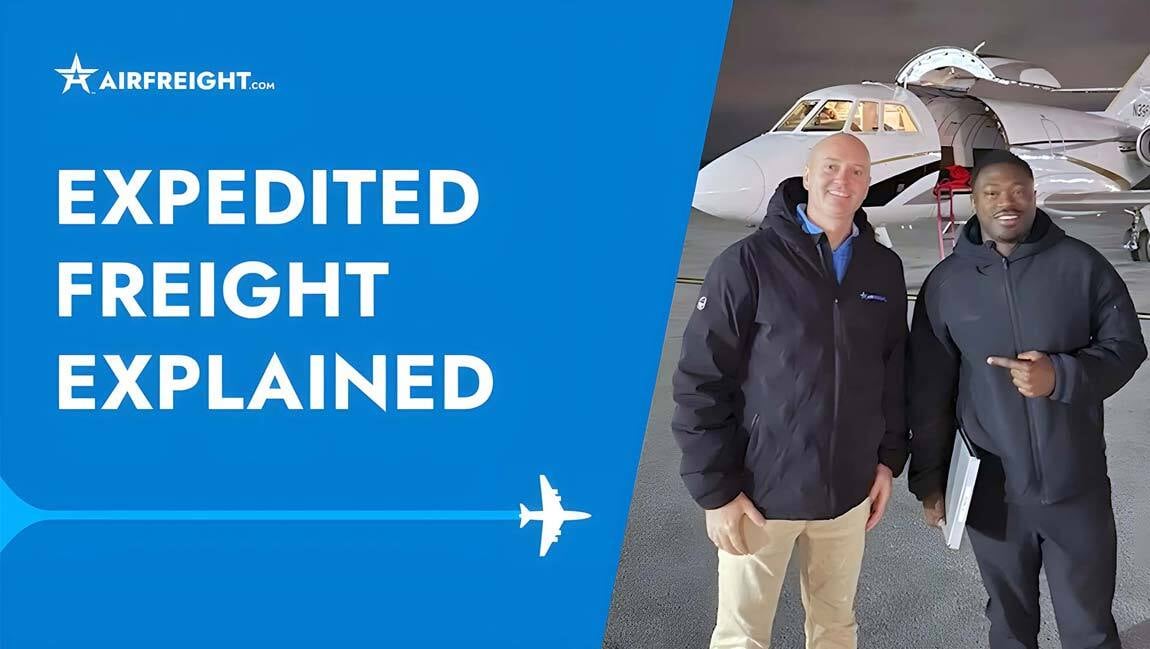
Shipping air freight involves more moving parts than most shippers realize, from carrier selection and cargo booking to customs clearance and final-mile delivery at the destination airport. The videos below break down how the process works, what equipment is involved, and how expedited service fits into a bigger picture logistics strategy. Recording the full scope of what goes into a successful move helps shippers stay ahead of complications before they arise.


Explore Your Air Freight Shipping Options
KEY BENEFITS
NATIONWIDE NETWORK
SameDayAir.com maintains a global reach that spans major commercial lanes and underserved locations across North America and beyond. Whether your shipment is moving between major hubs or needs to reach a remote facility not served by standard freight carriers, our booking team identifies routing options through cargo booking across multiple carriers to find the best price and fastest available path. Domestic air freight shipping and international lanes are both covered through a single point of coordination, giving shippers door to door visibility from origin to final delivery.
EXPLORE OUR SERVICES



When Your Cargo Demands Air Freight Solutions
- Time-Critical Parts
- High-Value Secure Cargo
- Remote Location Freight
- Global Trade Shipments
- Oversized Air Cargo
- Same Day Overnight Air
- North America Domestic Air
Time-Critical Parts
Production line shutdowns triggered by a missing component are among the most costly freight emergencies in manufacturing. Air freight shipping resolves these situations when ground transportation cannot meet the required window. Time-sensitive cargo moves faster by air than any other mode, including replacement parts, tooling, and industrial components. Our team books next flight out service or a dedicated freighter depending on size and urgency, and manages the full process from pickup through unloading at the plant.

High-Value Secure Cargo
Valuable cargo requires a shipping approach that minimizes handling and maximizes chain-of-custody visibility. High-value goods including electronics, precision instruments, and sensitive equipment benefit from air transit because fewer touchpoints than surface transport reduce exposure to loss or damage. Our dispatch team coordinates secure routing, monitors the shipment at every stage, and ensures the cargo arrives intact and on schedule at its final delivery point.

Remote Location Freight
Some destinations are simply not well served by standard freight carriers. Underserved locations in remote regions, island facilities, or areas with limited road infrastructure often require air freight as the only viable option for time-sensitive freight. Our global reach covers these routes, and our team identifies the closest accessible destination airport and coordinates last-mile delivery from there. Serving locations across the globe requires carrier knowledge that goes beyond average lane coverage.
Global Trade Shipments
Cross-border shipping involves more than booking a flight. Global trade shipments require customs clearance documentation, an accurate air waybill, and compliance with the import regulations of the destination country. Our team prepares the necessary paperwork, coordinates with customs brokers, and ensures the shipment moves through international checkpoints without unnecessary holds. Trade policies and local regulations vary by market around the world, and our team navigates those requirements on your behalf.
Oversized Air Cargo
Heavy items and oversized freight present a different set of challenges in the shipping industry. Not all aircraft can carry cargo of every dimension or weight, and standard commercial lanes may not accommodate the load. Our team sources freighters with the capacity to carry oversized freight that passenger airlines cannot, and structures the routing to minimize ground transfers. Complicated loads that must ship by air require specialized planning and expert advice from the first call.

Same Day Overnight Air
Same day and overnight air freight shipping are the most time-compressed options available to shippers. These services are built for situations where the delivery window is measured in hours, not days. Our team identifies the fastest available routing, books the space across multiple carriers if needed, and manages the handoffs to keep time-critical shipments on schedule. Overnight service is often the right call when next-day delivery is required and ground transportation cannot guarantee the window.

North America Domestic Air
Domestic air freight shipping across North America covers everything from coast-to-coast same day moves to regional next flight out bookings. Shipping air freight within the US and Canada gives shippers access to speed that no ground mode can match for long distances. Our team coordinates cargo booking across carriers serving hundreds of airports, matching your shipment to the fastest available routing based on origin, destination, cargo type, and delivery requirement. Expedited domestic service is available around the clock, and air freight shipping rates are quoted based on the best price across our carrier network.
AIR FREIGHT DEEP DIVE
Everything You Need to Know About Air Freight Shipping
Breaking Down Air Freight Shipping Costs
Why Air Freight Is the Most Expensive Mode of Transport
Air freight shipping is widely recognized as the most expensive mode of freight transport, but the cost reflects real operational value. Cargo aircraft burn significantly more fuel per ton-mile than ocean or ground alternatives, and airport handling, security screening, and tight scheduling all add to freight costs.
For time sensitive cargo, however, the premium is often justified. High value goods that sit in a warehouse or on a slow vessel accumulate carrying costs, insurance exposure, and opportunity costs that can quickly exceed the difference in shipping costs between air and surface transport.
How Air Freight Cost Is Calculated
Freight carriers price air shipments using either actual weight or volumetric weight, whichever is greater. This practice protects airlines from carrying bulky, lightweight cargo at a loss, and shippers need to account for both dimensions when estimating air freight cost.
Fuel surcharges, security fees, and destination airport handling charges are added on top of the base rate. Working with a freight forwarder who has relationships with multiple carriers gives shippers access to better pricing and the ability to compare air freight options across carriers on a single platform.
Getting the Best Price on Air Cargo
The best price on air freight shipping rarely comes from booking directly with a single airline. Consolidating shipments, booking in advance when schedules allow, and leveraging a dedicated team with carrier relationships all reduce per-kilo costs.
For shippers moving cargo regularly, establishing a volume agreement with a leading provider can lock in more predictable freight costs. Even on time critical shipments where flexibility is limited, a knowledgeable partner can identify next flight out options that balance speed with cost efficiency.

Moving Time Sensitive Freight When It Matters Most
The Role of Next Flight Out in Urgent Logistics
Next flight out service is the most urgent tier of air freight shipping, placing cargo on the very next available departure regardless of airline or routing. This option is essential for production line shutdowns, medical supply emergencies, and any scenario where a delayed shipment arrives too late to be useful.
A dedicated team monitoring departures in real time can identify next flight out options across passenger airlines and all-cargo carriers simultaneously. Because time sensitive freight cannot wait for consolidated loads, these shipments are typically booked as individual pieces or small pallets moving on the fastest available path to the destination airport.
Time Sensitive Cargo Across Long Distances
Air transport compresses long distances into hours rather than days or weeks, which is why global trade depends on air cargo for its most urgent and valuable cargo movements. A component manufactured in one region can reach a final destination on another continent within 24 hours under the right conditions.
For time-sensitive shipments crossing borders, customs clearance speed is just as critical as flight time. Shippers who pre-file documentation and work with experienced customs brokers avoid delays that can negate the speed advantage of air transit entirely.
Reliability as a Core Service Standard
Reliable service on time critical shipments means more than just fast flights. It means proactive exception management, real-time tracking, and a team that takes responsibility for the shipment from pickup through unloading at the destination airport.
The air cargo industry has developed specialized workflows for urgent freight that go well beyond standard booking. Carriers and freight forwarders who specialize in time critical shipments maintain relationships with ramp agents, ground handlers, and customs officials that allow them to move cargo through the system faster than general freight.
Navigating International Air Freight Shipping
Customs Clearance and the Air Waybill
Every international air freight shipment requires an air waybill, which serves as the contract of carriage, a customs declaration reference, and a tracking document all in one. Errors on the air waybill are one of the most common causes of customs delays, making accuracy at the cargo booking stage critical.
Customs clearance for international air cargo involves coordinating with authorities at both the origin and destination airport. A freight forwarder with global reach and established customs brokerage capabilities can pre-clear shipments electronically, reducing dwell time at the border and ensuring the shipment arrives on schedule.
Trade Policies and Air Freight Regulations
Trade policies, tariff classifications, and import licensing requirements vary significantly by country and cargo type. Shippers moving high value items across borders need to stay current with changing regulations, particularly in markets where trade policies have shifted in recent years.
Air freight regulations also govern how specific cargo types are packaged, labeled, and declared. Dangerous goods, for example, require compliance with IATA standards regardless of the carrier or route, and non-compliance can result in shipment rejection at the origin airport.
Reaching Global Markets Through a Global Network
A strong global network is what separates a capable international air freight partner from a basic booking agent. Access to multiple carriers, interline agreements, and relationships with handling agents at under serviced locations allows freight to move efficiently even when direct routes are not available.
For shippers expanding into new regions or serving remote locations, the depth of a provider's global network directly affects transit times and reliability. North America, Europe, and major Asia-Pacific hubs are well served, but reaching secondary markets often requires creative routing and local expertise that only an experienced partner can provide.
Air Freight Solutions for Specialized Cargo
Oversized and Heavy Items on Cargo Aircraft
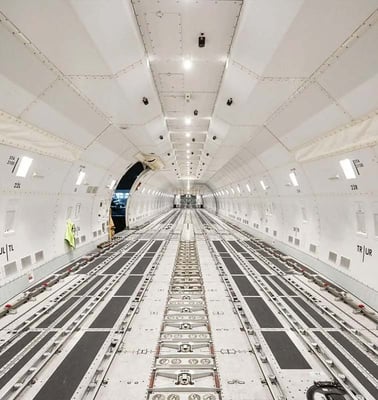
Not all freight fits in the belly hold of a passenger aircraft. Oversized and heavy cargo, including industrial machinery, aerospace components, and large manufacturing equipment, requires dedicated cargo aircraft with main-deck loading capability and specialized ground handling equipment.
Cargo aircraft configured for heavy items can carry loads that would be impossible on passenger airlines, but booking these flights requires advance planning and coordination with the carrier's load planning team. The cargo type, dimensions, and weight all determine which aircraft type is appropriate and which airports can handle the movement.
High Value Goods and Valuable Cargo Handling
High value goods such as electronics, pharmaceuticals, and precision instruments require more than just fast transit. They need secure handling, chain-of-custody documentation, and in some cases, dedicated storage at the destination airport while customs clearance is completed.
The air cargo industry has developed specific protocols for valuable cargo that include sealed containers, tamper-evident packaging, and restricted access handling. Shippers of high value items should confirm that their freight forwarder and the handling agents at each point in the journey meet these standards before the shipment departs.
Special Cargo Categories and Additional Services
Special cargo categories include dangerous goods, live animals, perishables, and outsized freight, each with its own regulatory framework and handling requirements. Air carriers maintain approved special cargo programs, and shippers must work within those programs to ensure compliance and safe transport.
Additional services such as white-glove handling, on-board courier options, and expedited ground transport at the destination can be layered onto an air freight shipment to create a complete door-to-door solution. A leading provider with a dedicated team can coordinate these elements across multiple carriers and ground partners, reducing the complexity that shippers would otherwise manage themselves.

Choosing Air Freight Over Other Modes of Transport
Air Freight vs. Ocean Freight for Global Trade
Ocean freight moves the majority of global trade by volume, but it cannot compete with air shipping on speed. Transit times that take weeks by sea are reduced to days or hours by air, which is why shippers of time-sensitive shipments, perishables, and high value goods consistently choose air freight services despite the higher cost.
The trade-off is not just speed versus price. Air cargo offers fewer touchpoints than ocean freight, which reduces the risk of damage, theft, and documentation errors. For cargo shipments where integrity and chain of custody matter as much as speed, the reduced handling that air transport provides is a meaningful operational advantage.
Surface Transport as a Complement to Air Freight
Surface transport plays an important role in the air freight process at both ends of the journey. Expedited ground transport connects shippers to the origin airport and delivers cargo from the destination airport to the final destination, and the quality of these ground links directly affects total transit time.
In some corridors, a combination of air shipping for the international leg and expedited ground for domestic segments produces better results than a pure air solution. A freight forwarder with both air and ground capabilities can design these hybrid freight solutions and manage the handoffs between modes.
When Air Freight Shipping Is the Right Choice
Book air freight when the cost of delay exceeds the premium over other modes of transport. This calculation applies to production-critical components, seasonal inventory with a short selling window, and any cargo where a missed delivery date has financial or contractual consequences.
Air freight options range from economy consolidations on passenger aircraft to dedicated cargo aircraft charters, giving shippers flexibility to match service level to urgency. Working with a partner who can assess the full range of air freight options and recommend the right tier for each shipment ensures that shippers are not overpaying for speed they do not need or under-investing when the stakes are high.
Expedited Freight Excellence: Explore Our Resource and Blog Section
SameDayAir.com is a leader in the expedited freight industry. Our blog and resource section offers information and resources to improve your logistics strategy.


From critical shipments to ongoing support, see why businesses continue to choose SameDayAir.com