

Trucking Companies
Coordinating freight across multiple freight carriers, equipment types, and deadlines is where standard truck companies consistently fall short. SameDayAir.com cuts through that complexity with dedicated expedited freight solutions, pairing your shipment with the right driver, vehicle, and route from the first call. When your cargo cannot wait for a full truckload to consolidate, we move it on your schedule.
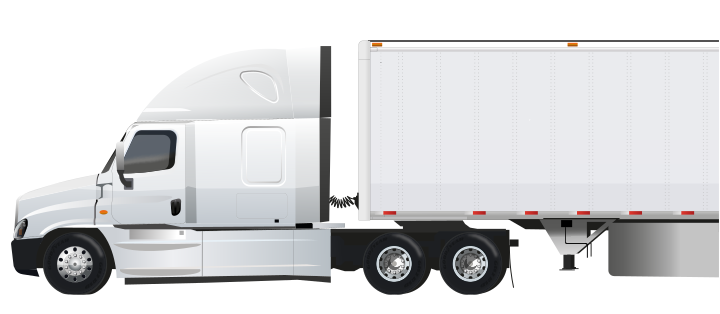





Expedited Freight Services Built for Priority Shipping
When Standard Trucking Companies Cannot Move Fast Enough
Most trucking companies are built around volume. They optimize for cost-per-mile, consolidate freight onto shared trailers, and route shipments through hub networks designed for efficiency, not urgency. That model works well until your shipment is time-critical.
Expedited shipping services exist precisely for those moments. Instead of waiting for a full truckload to fill, your freight moves on a dedicated vehicle dispatched directly to your origin. No relay points, no shared space, no waiting on another shipper's schedule.
SameDayAir.com operates a coast-to-coast network of dedicated drivers and experienced drivers across North America. Whether you need a cargo van for a smaller shipment, a tractor trailer for a full load, or specialized equipment for oversized loads and construction equipment, the right asset is matched to your delivery needs from the start.

Full Truckload Carriers
When freight volume demands a full tractor trailer and timing cannot flex, our ground transportation service dispatches a dedicated driver directly to your dock. No shared loads, no relay handoffs. Professional drivers move your time-sensitive freight point-to-point with real-time updates throughout, giving your team the visibility needed to keep logistics operations on track.

Flatbed Trucking
Oversized loads, construction equipment, building materials, and industrial machinery require more than a standard trailer. Our network includes flatbed services and specialized configurations matched to your load dimensions and weight. Permit coordination and route planning are handled before the truck rolls, so your experienced team can focus on the project, not the paperwork.

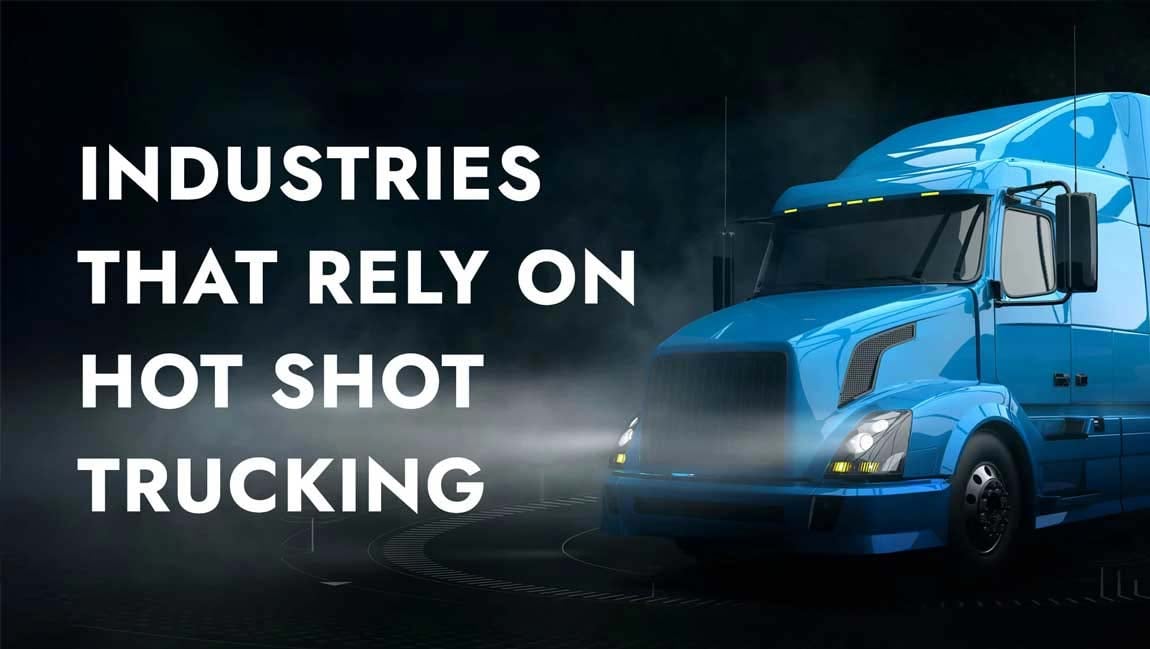
Hot Shot Trucking
Smaller shipments that still demand speed are matched to cargo vans or hotshot trucking owner operators from our dedicated network. These assets move fast, skip the freight terminal entirely, and deliver direct. Ideal for parts, components, and urgent order fulfillment that does not fill a full trailer. Swift transportation at this level can make all the difference when a production line is waiting.
WHAT WE DO
How Expedited Freight Solutions Work for Your Shipment
Expedited freight services cut through the delays that standard trucking companies build into their networks by design. From hotshot trucking moves to dedicated tractor trailer dispatches, the right solution depends on your freight requirements, your timeline, and how much a missed delivery actually costs your operation. A non-asset logistics company like SameDayAir.com efficiently connects your shipment to the best available asset across a coast-to-coast network.

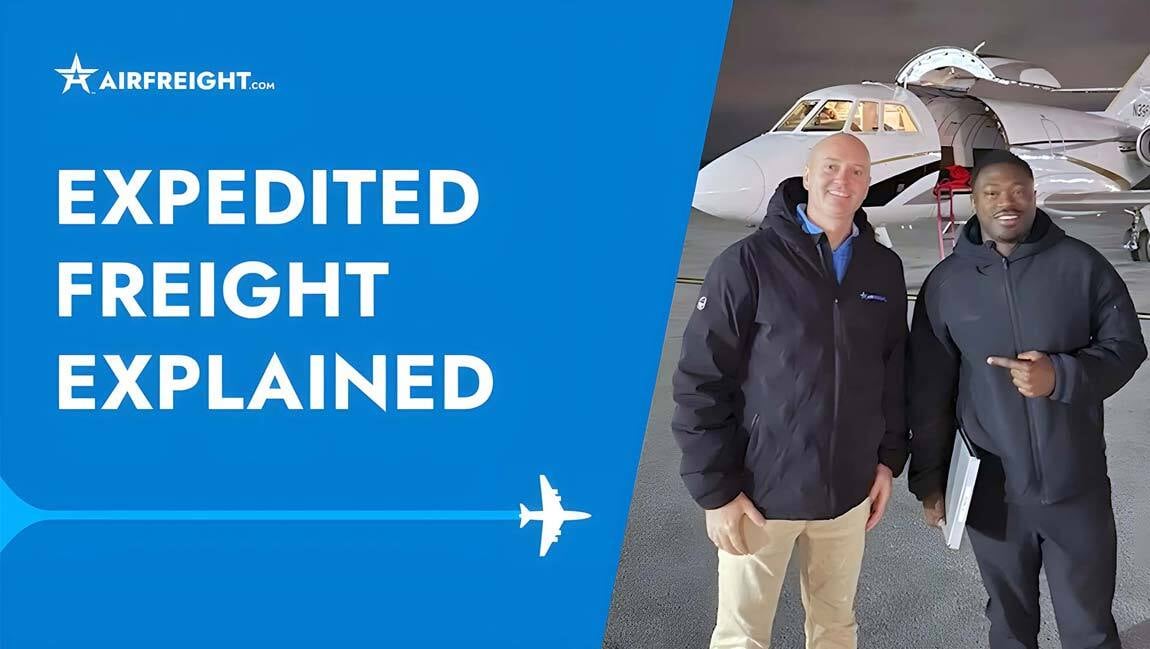
Understanding the Trucking Industry: Key Terms and Service Types
KEY BENEFITS
NATIONWIDE NETWORK
A motor carrier is any company or individual legally authorized to transport cargo for hire over public roads. National trucking companies typically operate their own fleet of trucks and employ professional drivers under a single operating authority. Smaller freight carriers may specialize in regional lanes or specific freight types. When evaluating any truck company, shippers often review FMCSA safety ratings, which reflect inspection history, compliance records, and accident data. A solid reputation in the logistics industry is built on consistent safety ratings, legal compliance, and a commitment to the customer experience, not just competitive freight rates.
EXPLORE OUR SERVICES



Industries and Scenarios That Demand More Than Standard Trucking Services
- Oilfield Equipment Delivery
- Manufacturing Parts Freight
- Cross-Country Priority Freight
- Project Cargo Transport
- Recovery Freight Solutions
- Tech-Driven Freight Moves
- Urgent Freight Dispatch

Oilfield Equipment Delivery
Oilfield equipment delays shut down production and burn dayrate costs fast. When a pump, valve assembly, or critical component needs to reach an oil field site without waiting on a standard carrier's next available truck, expedited freight services provide a direct solution. Experienced drivers with well-equipped assets are dispatched immediately, and real-time updates keep your operations team informed from pickup to delivery. Our network covers remote oil field locations across North America where standard trucking companies are often unable to commit to firm delivery windows.

Manufacturing Parts Freight
A line-down event at a manufacturing facility can cost thousands of dollars per hour. When a critical part misses its delivery window, the right trucking company is one that can dispatch a dedicated driver within hours, not days. Our expedited shipping solutions are built for exactly this scenario: direct pickup, no terminal stops, and a committed driver moving your freight to the production floor on the fastest available ground route. Proactive communication keeps your team updated at every stage, resolving uncertainty before it compounds.
Cross-Country Priority Freight
Long haul, cross-country moves on tight deadlines require more than a standard full truckload booking. Dedicated over-the-road drivers move your freight point-to-point without the relay handoffs that add transit time in conventional carrier networks. For shippers managing time-critical freight across multiple states, our coast-to-coast network of experienced drivers provides consistent coverage without the coordination overhead of managing multiple freight carriers. Competitive freight rates are matched to your specific lane and timeline.

Project Cargo Transport
Oversized loads involving construction materials, industrial machinery, or modular components require more than a standard trailer and significant lead time. Our flatbed services and specialized rigging coordination cover loads that exceed standard dimensions, with permit management handled before the truck rolls. Whether you are transporting construction equipment, modular components, or high-value machinery, our experienced team manages the logistics from route survey to final placement, keeping your project timeline intact.

Recovery Freight Solutions
When a carrier network fails, a truck breaks down, or a shipment misses its connection, recovery freight becomes the immediate priority. Expedited freight providers resolve these gaps by dispatching available assets quickly, bypassing the manual processes that slow down standard trucking companies in recovery scenarios. Our dispatch team identifies the nearest qualified driver, confirms equipment availability, and gets your freight moving again with minimal delay. This is where a strong presence in the expedited freight market and a solid reputation for reliability make all the difference.

Tech-Driven Freight Moves
Advanced logistics technology is no longer optional for shippers managing complex delivery needs across multiple lanes. Over-the-road moves that once relied on manual processes, phone calls, and paper documentation now benefit from real-time updates, automated status alerts, and digital proof of delivery. Our platform streamlines freight transportation coordination, giving operations teams visibility into driver location, estimated arrival, and delivery confirmation without chasing updates from multiple freight carriers. This level of transparency supports supply chain management and operational efficiency across your entire logistics operation.

Urgent Freight Dispatch
Some freight situations do not allow time to evaluate multiple truck companies, compare shipping services, or wait for a load board match. When urgency is the primary variable, the best trucking company is one with a committed dispatch team, an established network of pre-vetted drivers, and the operational infrastructure to move an urgent order within hours. SameDayAir.com provides day freight delivery services for exactly these moments, with a single point of contact managing your shipment from first call to final delivery confirmation.
TRUCKING INDUSTRY INSIGHTS
What Sets the Best Trucking Companies Apart
Expedited Freight Solutions for Time-Critical Loads
When standard transit times are not acceptable, expedited freight services fill the gap between routine ground shipping and air freight. These services rely on dedicated drivers who run team operations, minimizing dwell time and keeping cargo moving around the clock across North America.
Expedited Freight Providers and Their Carrier Networks
The strongest expedited freight providers maintain an extensive network of owner operators and company drivers, giving shippers access to available loads and capacity on short notice. Unlike load board transactions, dedicated expedited truckers typically operate under direct dispatch, which reduces the coordination delays common with multiple carriers.
Expedited freight solutions are built around freight requirements that cannot tolerate the consolidation windows used in less than truckload shipping. Cargo moves point-to-point without intermediate handling, which also reduces damage risk and improves delivery predictability.
Well Maintained Equipment and Operational Efficiency
Expedited freight companies invest heavily in fleet maintenance because a breakdown mid-run can eliminate the time advantage the shipper paid for. Well maintained equipment, combined with real-time tracking, gives clients visibility into load status without manual processes slowing down communication.
Operational efficiency in expedited trucking depends on matching the right equipment to each load. Cargo vans handle smaller shipments, straight trucks cover mid-size freight, and tractor trailer units move full truckload volumes when speed is still the priority. Choosing the right trucking company means confirming they have the right asset mix for your freight profile.
Safety ratings are a non-negotiable filter when evaluating expedited freight providers. A solid reputation in the transportation industry is built on consistent CSA scores, legal compliance, and a commitment to protecting both cargo and the drivers running those loads.

Ground Expedited Trucking Across North America
Ground expedited trucking occupies a specific niche in the transportation industry: faster than standard over-the-road truck drivers running solo, but more cost-effective than air freight for shipments that can absorb a day or two of transit. Team drivers alternate behind the wheel so the truck rarely stops, compressing multi-day lanes into single-day deliveries across large portions of the country.
Trucking Services Built Around Direct Routing
National trucking companies offering ground expedited lanes avoid the hub-and-spoke model that adds time to conventional trucking services. Freight moves on a direct origin-to-destination path, which also simplifies legal compliance around hours-of-service because dispatchers can plan relay points in advance rather than reacting to delays.
Smaller carriers sometimes struggle to cover broad geographic demand because they lack the driver base for consistent team coverage. Larger trucking companies with a strong presence in key freight corridors can guarantee capacity where smaller operations cannot, which matters when a plant shutdown or production delay is on the line.
Owner Operators and Driving Opportunities in Expedited Trucking
Many drivers are drawn to expedited trucking because the freight moves quickly and the miles accumulate faster than in conventional long haul operations. Owner operators find driving opportunities attractive in this segment because competitive rates and more loads per week improve revenue per truck compared to standard truckload lanes.
For shippers, the practical advantage of ground expedited trucking is that it keeps business forward without the premium cost of air charter services. When freight requirements allow 24 to 48 hours of transit, a well equipped ground expedited fleet is often the most efficient delivery option available.

Heavy Haul and Flatbed Trucks for Oversized Freight
Heavy haul freight moves oilfield equipment, industrial machinery, project cargo, and oversized structures that exceed standard legal dimensions. This segment of the trucking industry demands more than a capable truck: it requires route surveys, pilot cars, state permits, and drivers with specific experience handling loads that shift the center of gravity well beyond normal parameters.
Project Cargo and Oilfield Equipment Transport
Oil field operations generate some of the most demanding freight requirements in North America. Drilling components, pressure vessels, and modular structures often move on tight schedules tied to rig mobilization windows. Trucking companies serving this sector must combine flatbed trucks and specialized trailers with the logistical capability to coordinate permits across multiple state lines simultaneously.
Project cargo moves differently than commodity freight. Each shipment is essentially a custom operation, requiring engineering input on load securement, bridge weight analysis, and sometimes utility line coordination along the route. The right trucking company for this work maintains relationships with state DOT offices and understands how to protect cargo integrity across long, complex moves.
Legal Compliance and Safety Ratings for Oversized Loads
Legal compliance in heavy haul is more layered than in standard trucking. Permit requirements vary by state, seasonal weight restrictions change road access, and hazardous materials regulations may apply when loads include pressurized or chemically active components. Motor carrier safety ratings in this segment reflect not just driver performance but also the company's permit management and load securement practices.
Fleet maintenance is especially critical for heavy haul operations because the mechanical stress on equipment is significantly higher than in standard trucking services. Shippers evaluating trucking companies for oversized work should ask specifically about inspection intervals, tire management programs, and how the carrier handles equipment failures mid-route.
Third-Party Logistics and Supply Chain Efficiency
Third-party logistics providers, commonly called 3PLs, give shippers access to a broad range of transportation services without the overhead of managing relationships with multiple carriers directly. By consolidating freight requirements under a single point of contact, 3PLs help businesses streamline procurement, reduce manual processes, and gain better visibility into total freight spend.
Best Freight Brokers and Load Board Alternatives
The best freight brokers go beyond simply posting freight to a load board. They pre-qualify carriers based on safety ratings, insurance levels, and service history, then match freight to the right trucking company rather than just the cheapest available option. This approach protects shippers from the capacity and reliability risks that come with transacting through open load boards.
For shippers with consistent volume, a 3PL can negotiate competitive rates with preferred carriers and build dedicated lanes that improve both cost and transit time predictability. This is particularly valuable for businesses that move intermodal freight, where coordinating rail and trucking services requires tight scheduling across multiple providers.
Advanced Logistics Technology and Real-Time Tracking
Advanced logistics technology is now a baseline expectation for 3PLs competing in the logistics industry. Real-time tracking, automated load tendering, and digital documentation reduce the friction that historically made freight management labor-intensive. Shippers can monitor shipment status, manage exceptions, and access freight data without calling dispatchers or waiting for manual updates.
Intermodal freight management is one area where 3PL technology delivers clear value. Coordinating drayage, rail segments, and final-mile trucking services across an extensive network requires data integration that most shippers cannot build internally. A committed 3PL partner with the right technology stack can make intermodal competitive with over-the-road trucking on lanes where rail access exists.

Air Freight and Air Charter for Critical Shipments
Air freight is the escalation option when ground expedited trucking cannot deliver within the required window. For manufacturing line shutdowns, medical equipment failures, or aerospace component shortages, waiting an extra day is not an option. Air freight moves cargo on the next flight out, compressing transcontinental transit to hours rather than days.
Air Charter Services for Urgent and Oversized Cargo
Air charter services go a step further than commercial air freight by dedicating an entire aircraft to a single shipment or customer. This eliminates the weight and dimensional restrictions of belly cargo on commercial flights and removes the risk of freight being bumped due to passenger baggage priority. Charter is particularly relevant for priority shipments that are too large or too urgent for standard air freight options.
Trucking companies that operate as part of an integrated expedited network often coordinate the ground legs on both ends of an air shipment. The cargo moves from the origin facility by cargo van or straight truck to the departure airport, then transfers to a ground crew at the destination for final delivery. This door-to-door coordination is what separates a capable expedited provider from a carrier that only handles one segment.
Combining Air and Ground for Same Day Delivery
Same day delivery across long distances almost always requires an air component. A shipment that originates in one region and needs to arrive across the country the same day will typically move by air, with ground transportation services handling pickup and final mile. Coordinating these segments without gaps requires a provider with both air relationships and its own fleet or a reliable carrier network on the ground.
For clients evaluating whether air freight or ground expedited trucking is the right choice, the decision usually comes down to distance, freight dimensions, and the hard deadline. Providing transportation services that span both modes gives shippers a single point of accountability regardless of which combination the freight requires.
Expedited Freight Excellence: Explore Our Resource and Blog Section
SameDayAir.com is a leader in the expedited freight industry. Our blog and resource section offers information and resources to improve your logistics strategy.



From critical shipments to ongoing support, see why businesses continue to choose SameDayAir.com